BBC Picos
Rethinking the commissioning process at the BBC.
Due to confidentiality, this document details only the context of the project and provides a high-level description of the main actions taken.
All information in this section is my own and does not necessarily reflect the views of the BBC.
The BBC commissions world class content with a distinctly British perspective and we want to work with the best producers and creatives to tell stories which excite, educate and entertain.
THE VISION
A new commissioning experience
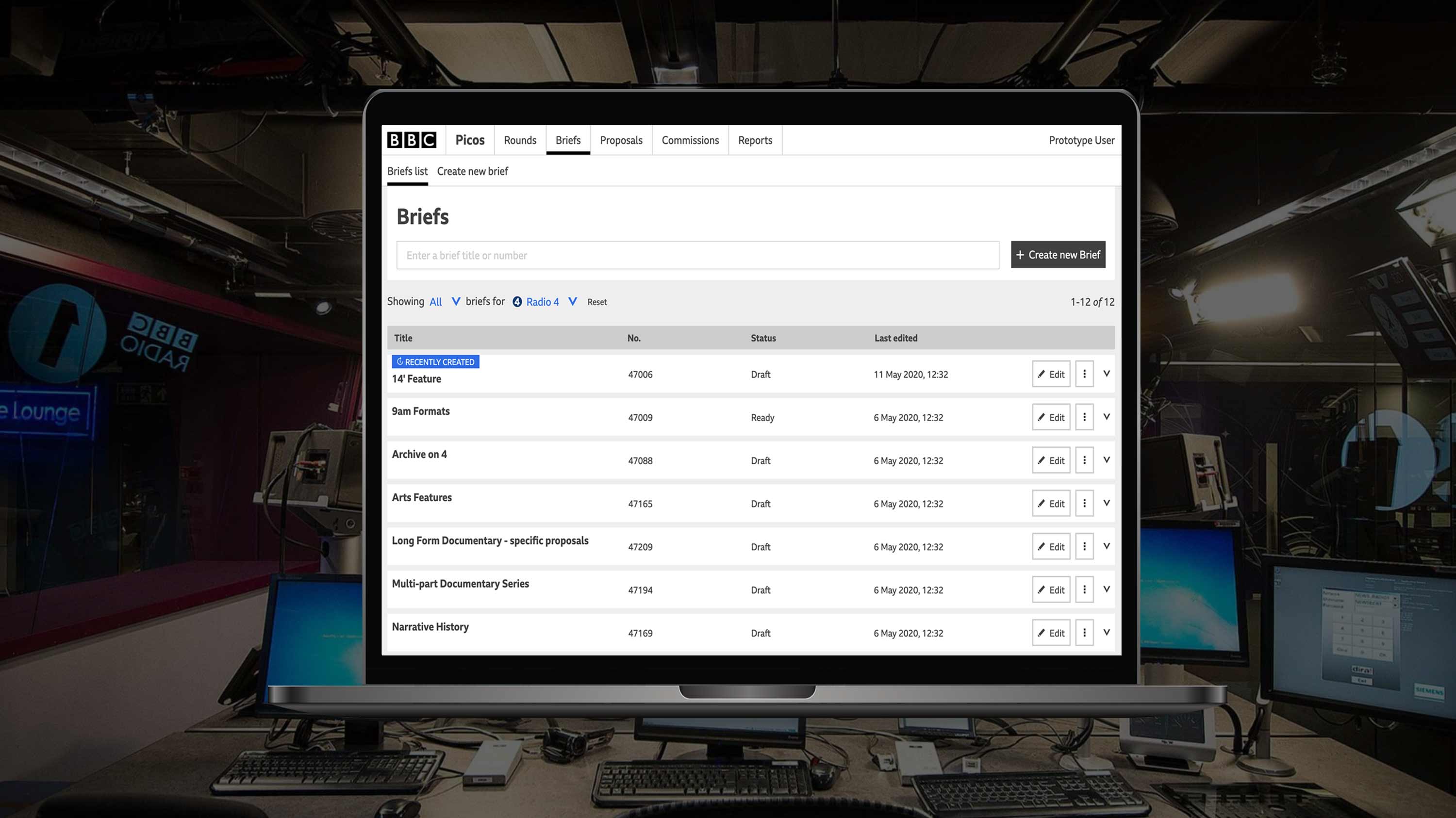
Picos is the pan-BBC Proposal and Commissioning Management system: a single internal tool built to replace the many different systems previously used across the organisation.
It supports media-agnostic content commissioning end to end, managing production metadata from the initial brief through to proposal and commission.
The system delivers several key benefits:
- Ease of use for suppliers submitting programme ideas to the BBC
- A unified view of all BBC programme procurement opportunities for content suppliers
- Better business information to support decision making
- Media-agnostic workflows
- A scalable, reusable approach
MY ROLE
It's all about choreography
As part of the S&SD Team (Systems & Service Design), I worked in a UXD squad alongside designers, UX writers and researchers. Getting the choreography right across disciplines is something I consider fundamental to good design practice.
I led the user and stakeholder research to identify needs, opportunities and pain points. I then defined the full information architecture for the Admin of Commissioning System (Picos Mission 2), contributed to the prototype, and planned and ran the usability testing sessions.
My responsibilities included:
- Problem setting through in-depth user research (identifying pain points and opportunity areas)
- A human-centred model for structuring the relationship between content types
- Detailed workflow design
- UI design iterations and a fully functioning HTML prototype
- Usability testing
ACTION
Kick-off: building a shared plan
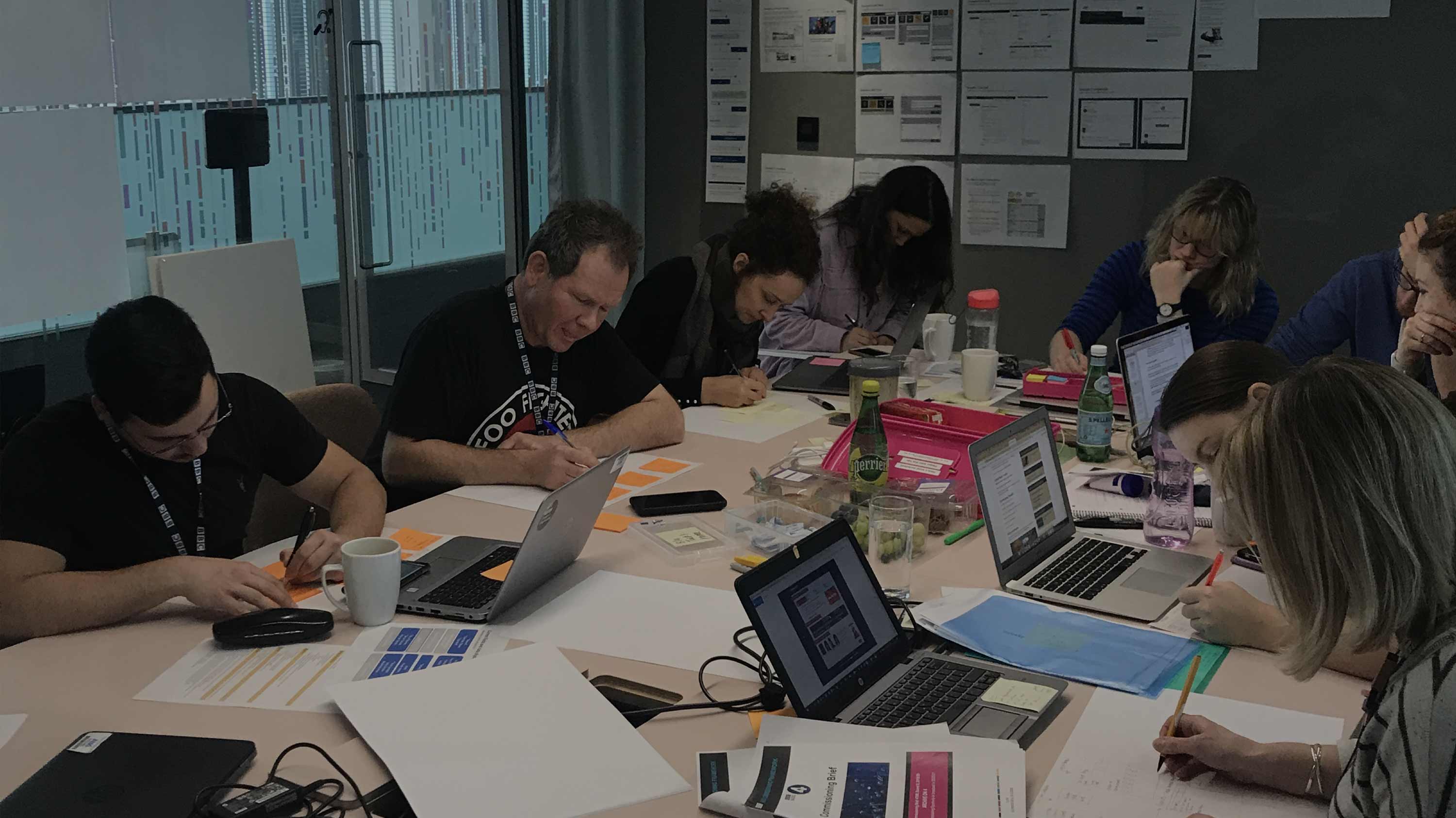
I set up a one-day kick-off workshop to establish a shared, structured plan. The session brought the team together to surface early research, align on user and business needs, identify pain points and opportunity areas, and agree priorities for the sprints ahead.
The design process ran across eight four-week sprints. The kick-off work led directly to the definition of objectives and strategies for the project.
ACTION
Understanding the problem through research
I ran several in-depth research sessions with users: both BBC staff and external content suppliers. Working with the researcher allocated to the project, I defined the discussion guides for each session.
The sessions focused on understanding users' mental models and how they navigated their daily tasks using the previous commissioning tool. All insights were synthesised and reported back to the wider team.
ACTION
Designing a detailed workflow
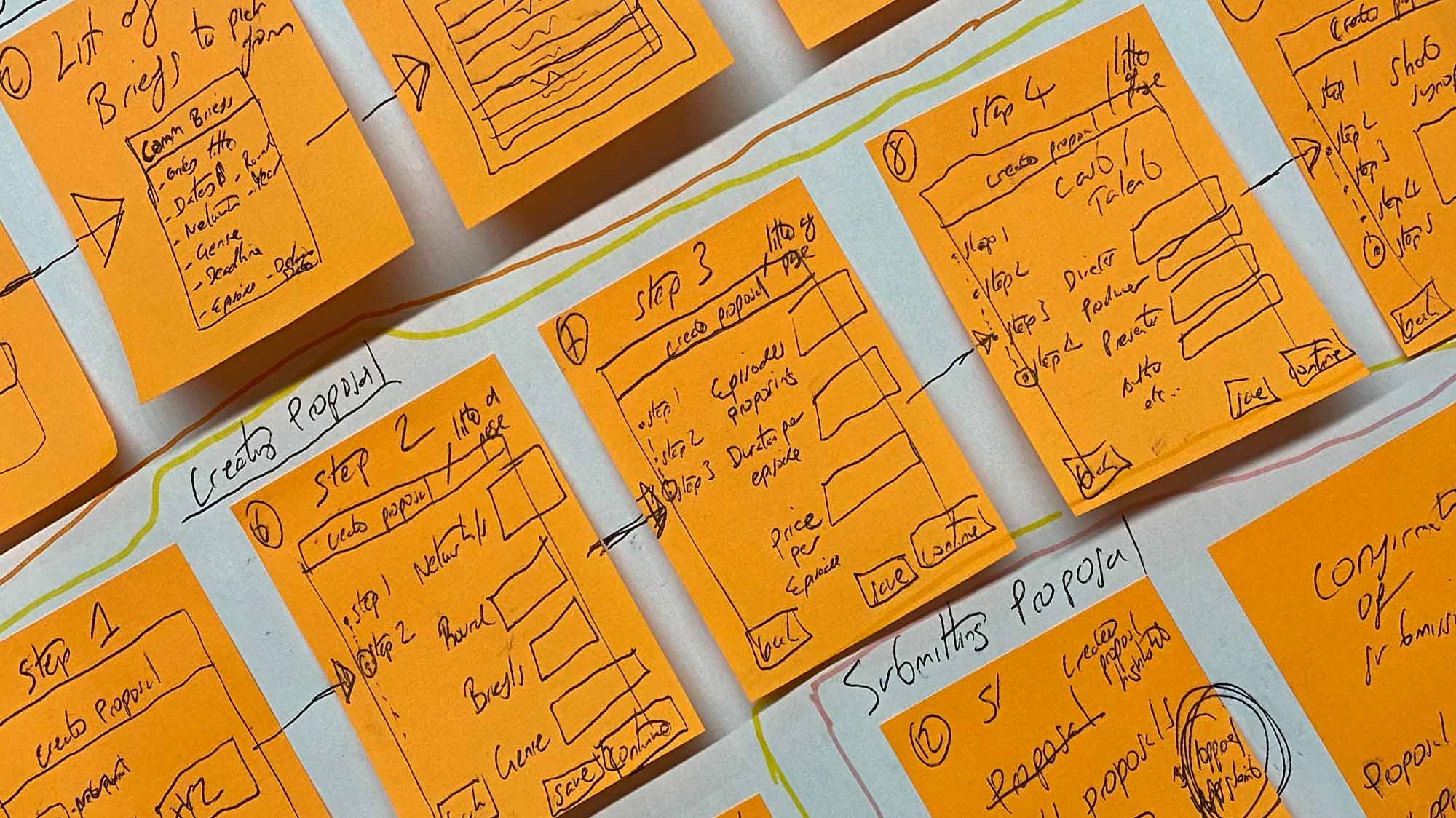
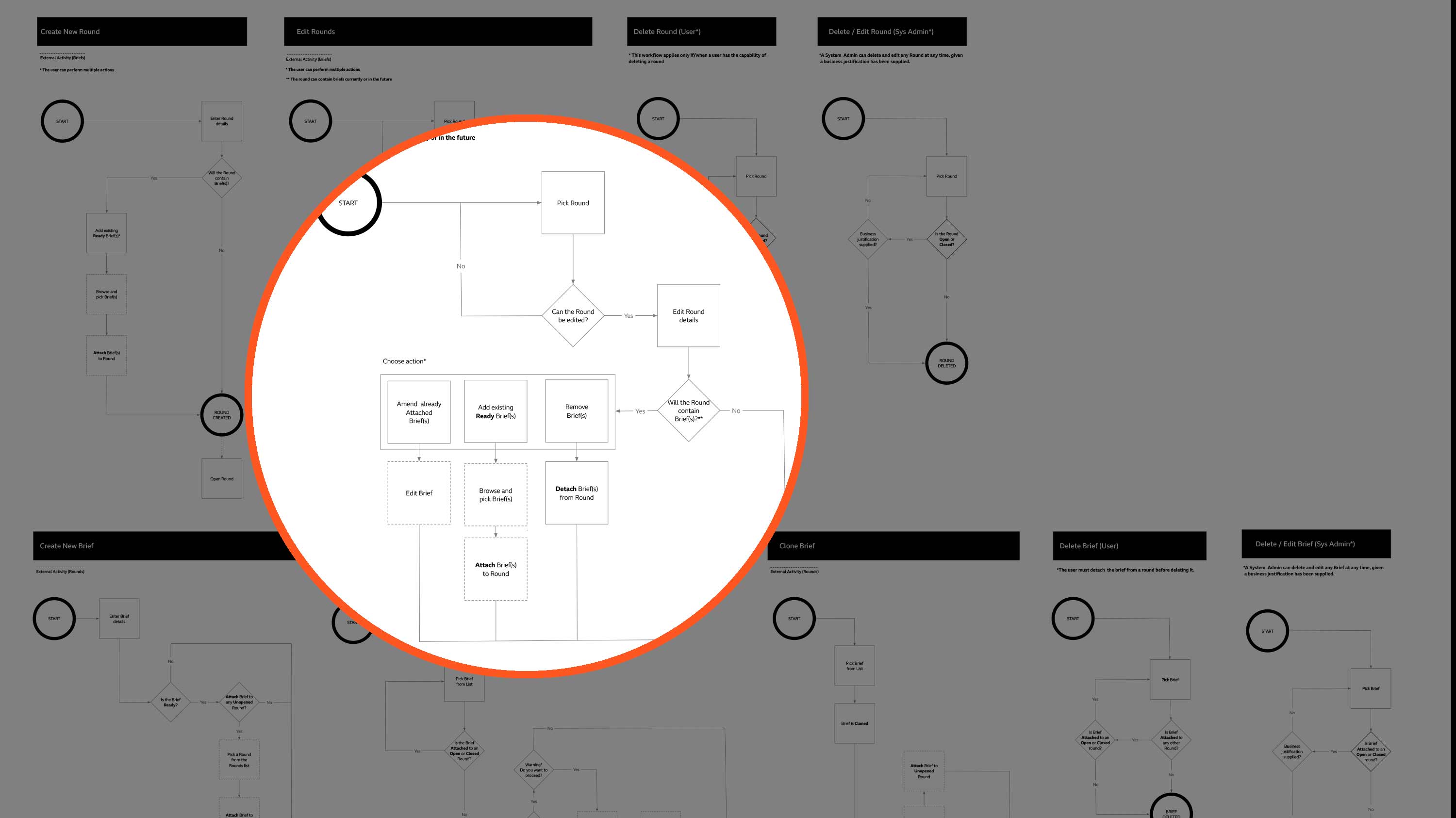
The research insights informed the next step. I assessed the technical constraints alongside business and user needs to design new, comprehensive user workflows.
I deconstructed and analysed the previous system, re-mapping its domain model from scratch, then redesigned it to be more flexible and scalable. The new workflows were validated through collaborative sessions with the product team and end users.
ACTION
Getting a prototype to test
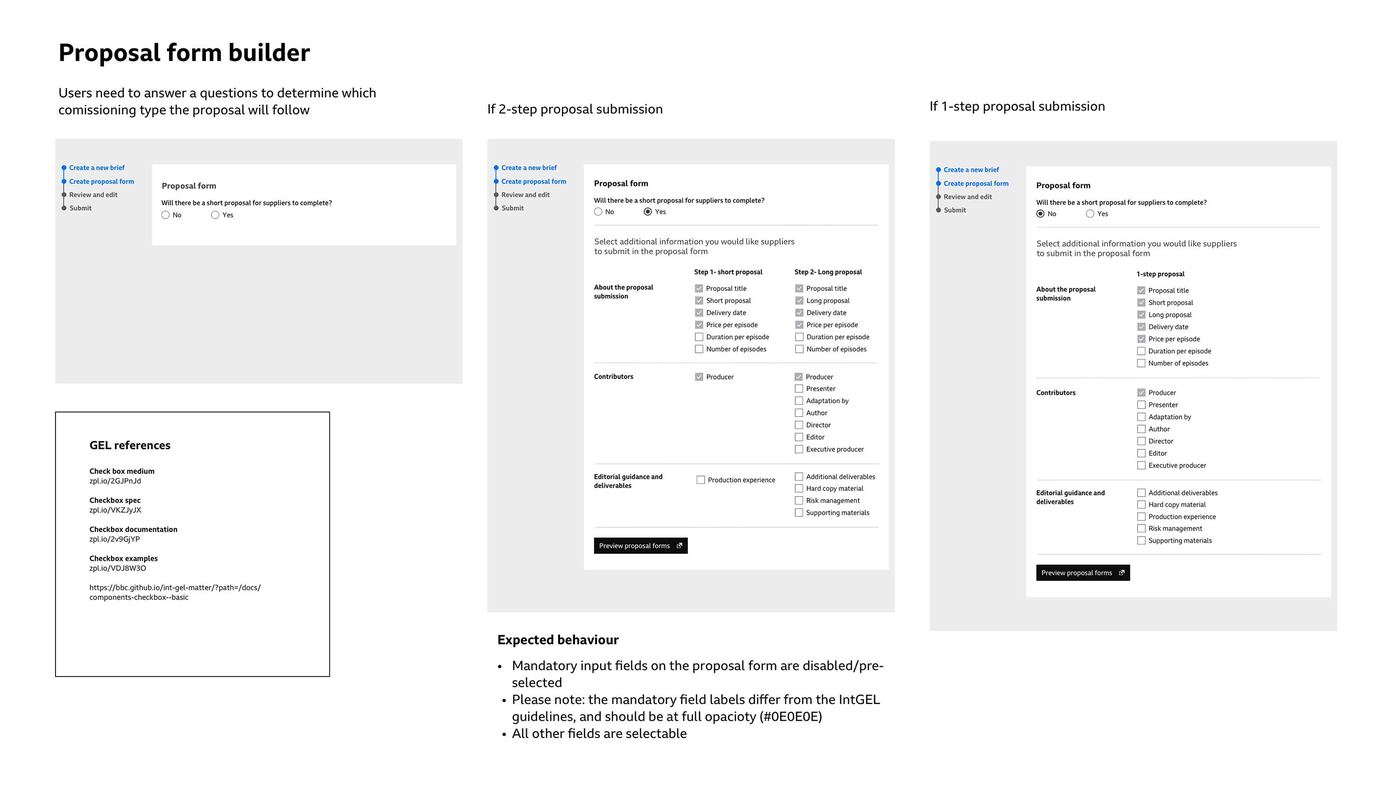
I guided the iterative UI design process, providing wireframes, interaction design patterns and heuristic evaluations. Throughout, I ensured the prototype followed BBC GEL guidelines and met accessibility requirements.
Working closely with the development team, I helped deliver a fully functioning HTML prototype ready for testing.
ACTION
Usability testing
I designed and ran a remote usability study with the team. The objective was to put the HTML prototype in front of real users and evaluate how well it performed.
Eight users matching the target profile were recruited. Each completed a set of tasks using the prototype on their own device, in their own home, with screen and audio recorded. Findings were synthesised and fed directly into the next sprint.
IMPACT
A model that worked
The model I designed was successfully implemented and validated with end users. It proved that a single, unified tool could support the full commissioning lifecycle across all BBC media types.
- 85%
- Task completion rate in usability testing, across all assigned tasks
A strong result for a system of this complexity. The findings were synthesised and fed directly into the next phase of development, shaping both the product roadmap and the team's priorities.