BBC Sounds Collections
Designing a new page that showcases editorially curated content around a specific topic to enhance content discovery.
Due to confidentiality, this document details only the context of the project and provides a high-level description of the main actions taken.
All information in this section is my own and does not necessarily reflect the views of the BBC.
THE CONTEXT
We need more flexibility
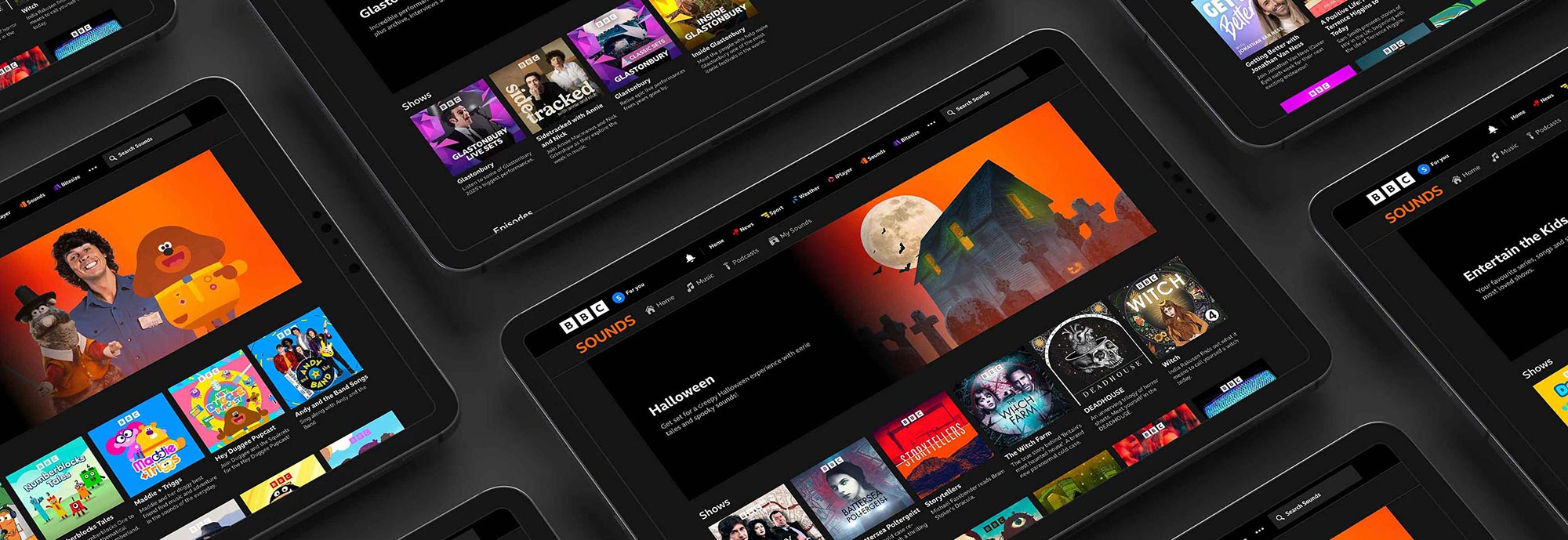
BBC Sounds organises content around fixed genre categories such as comedy or drama. Clear for general browsing, but not designed for moments.
Our users told us they often wanted to find content related to a specific activity or a timely event. That kind of fluid, short-lived aggregation is simply not feasible with a rigid, pre-defined taxonomy.
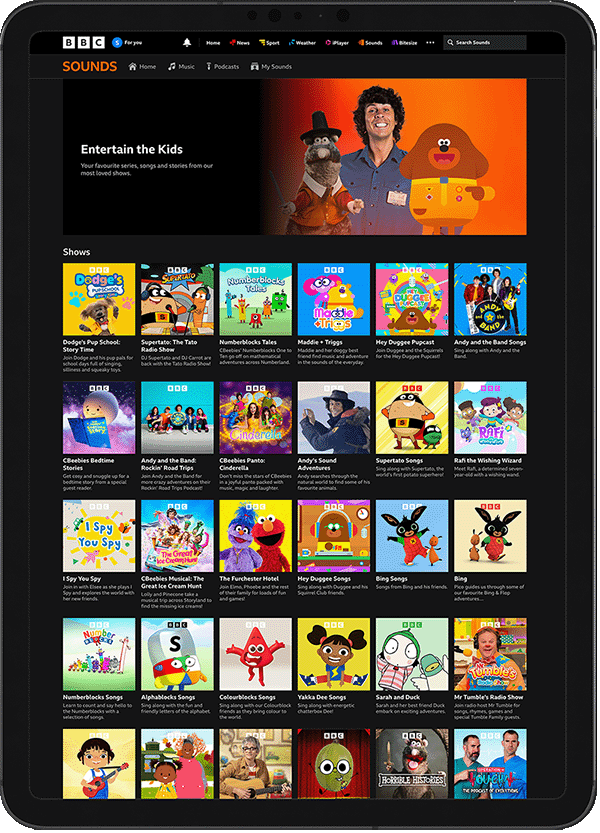
To fill the gap, the curation team had been creating temporary shows to group related content together. Workarounds like creating an Entertain the Kids show could serve the need in the short term, but they pushed the system well beyond what it was designed for: episodes got duplicated, the content structure grew cluttered, and the approach was becoming unsustainable.
We needed a proper solution. One that would let the editorial team create, populate and retire aggregations of content without touching the underlying metadata structure. Flexible, scalable and reusable. That solution was collections.
BEFORE
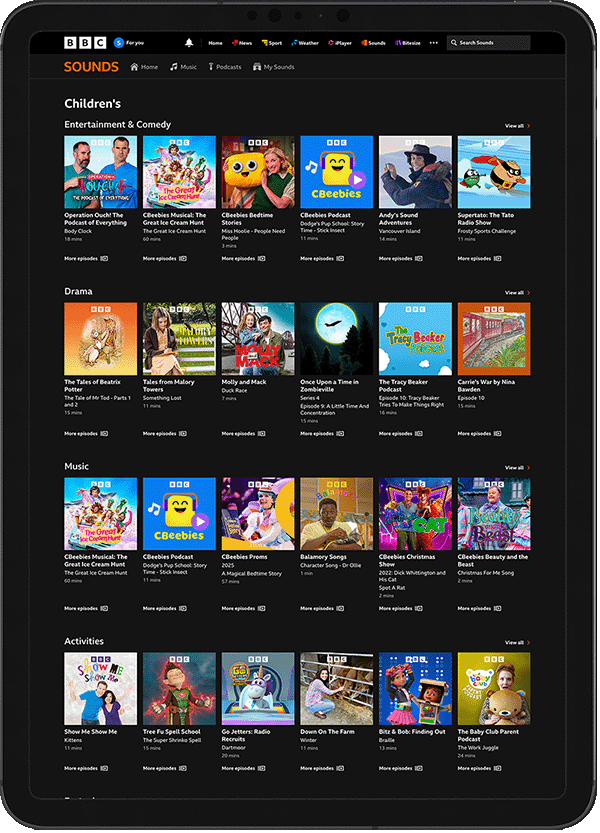
Only rigid, pre-defined categories.
The existing browse experience relied entirely on fixed genre categories. Users looking for content around a specific topic or moment had no dedicated destination to find it.
AFTER
Flexible, audience-oriented collections.
Collections introduced a flexible, curated destination: a new page type the editorial team could create, populate and retire as needed, without touching the underlying content structure and metadata.
MY ROLE
UX lead across teams and disciplines
I led the UX work end to end: scoping, planning, and designing features and user journeys in close collaboration with product, editorial and development teams.
I represented the UX perspective in conversations with senior stakeholders across the business units involved, keeping user needs, product goals and editorial requirements aligned throughout.
Several challenges made this project truly exciting.
- Navigating a complex organisational structure while keeping user, product and business needs in constant alignment.
- Designing a seamless onward journey that encouraged content discovery across platforms and devices.
- Defining a visual presentation for the new content aggregations that was both compelling for users and measurable against the agreed KPIs.
- Finding the best possible design response within tight technical constraints.
ACTION
Collecting needs and aligning teams
The first step was to collect the needs from our users, product and editorial teams.
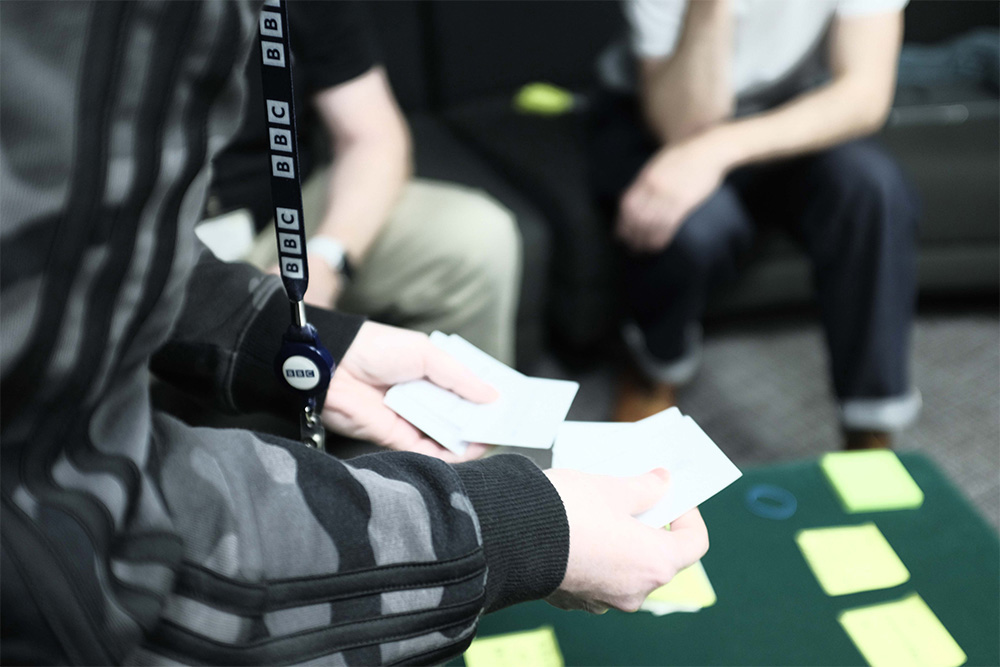
I reviewed previous research to confirm the initiative was addressing real user needs, particularly around content discovery and communicating the breadth of what BBC Sounds has to offer. Alongside that, I designed and facilitated in-person workshops with stakeholders to surface requirements directly and align all teams involved.
ACTION
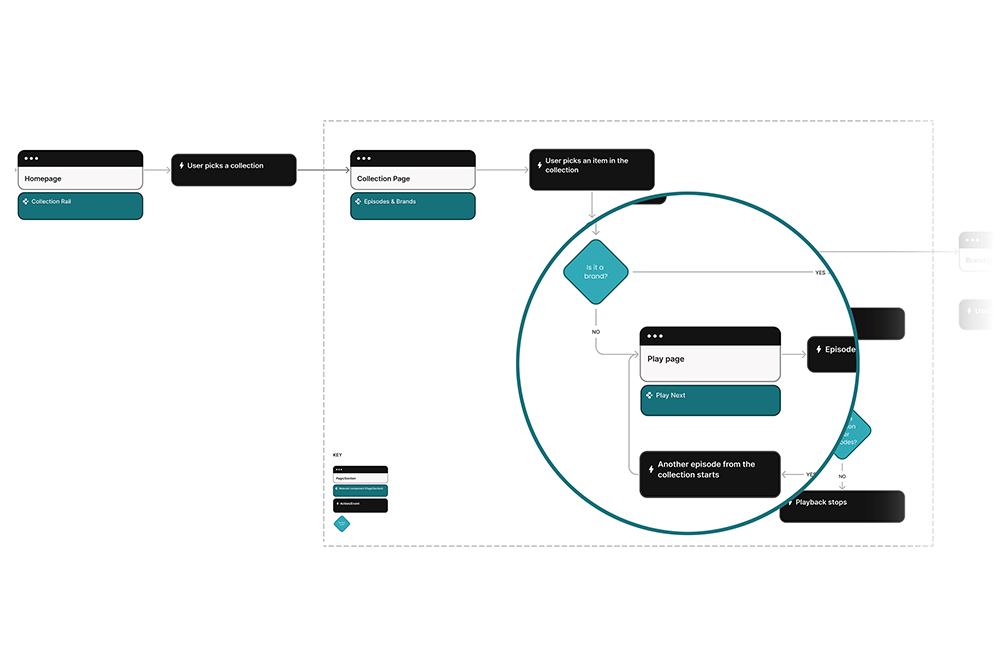
Designing the onward journey
The second step was defining how users would navigate from a collection into the wider BBC Sounds catalogue.
That required a precise understanding of the product's Information Architecture across platforms and devices, as well as the backend structure I had come to know over years of working on Sounds.
ACTION
Iterating on design
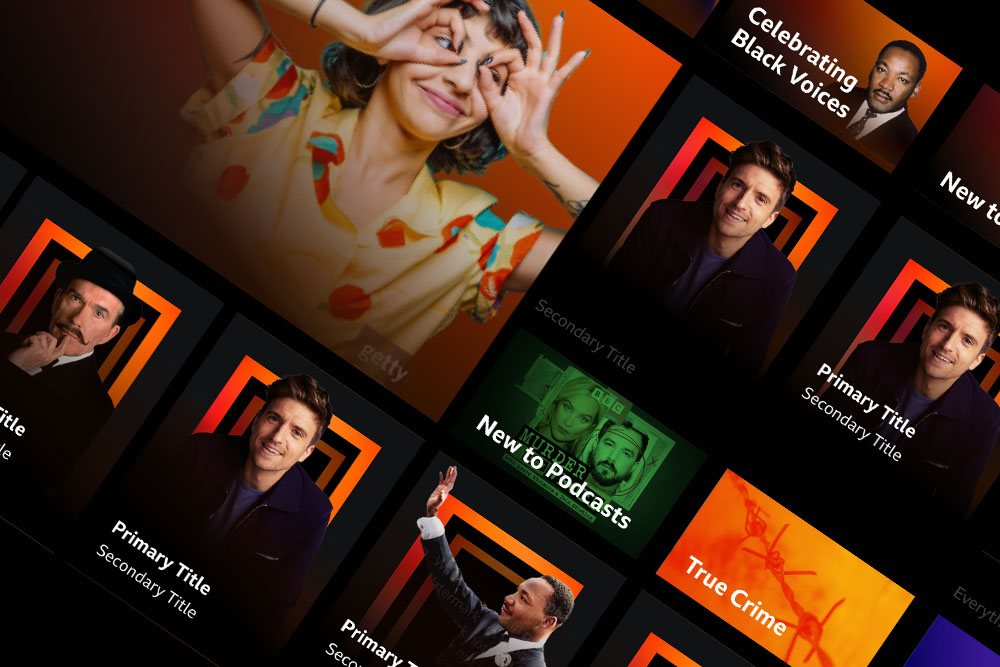
The design work was a hands-on collaboration: I set the direction and led two designers through multiple iterations, navigating both branding and platform constraints until we had visual templates robust enough to work across every platform and device.
IMPACT
Improved content discoverability and editorial efficiency
Collections landed well. The data showed users engaging with the feature in the ways we had designed it for.
The following metrics were positively impacted:
- 12.1%
- Higher click-through rate for new users (9.9% for light users)
- 11.3%
- Under-35s more likely to click through to the collections page
- 8.7%
- Click-through rate, comparable to others on the page
- 8.8%
- Higher click-through rate on mobile, versus 6.9% on web
The ability to create timely and relevant collections has improved content discoverability. Users can easily find content related to current events or trending topics, enhancing their overall experience.
The new feature has streamlined the workflow for the editorial team, allowing them to create and manage aggregations of content more efficiently. This has led to a more dynamic and responsive content strategy, aligning with user needs and preferences.
This has been a brilliant collaboration across so many different teams and people.