Urrà Torino
Designing a website for a public art project using Object Oriented UX, from research through to code.
THE CONTEXT
Art that transforms places
Urrà Torino is a public art project run by Kallipolis, an Italian non-profit organisation devoted to improving the liveability of human settlements both in Italy and abroad.
For this project, artists are commissioned to create installations across different neighbourhoods in Turin, each working in and around specific streets and residential areas.
The project needed a website to document the work, connect the community, and give visibility to the artists, the areas, and the residencies.
The site needed to:
- Give each artist and area a dedicated, coherent presence
- Make the relationships between artists, areas, and residencies navigable
- Reflect the visual identity of the project
- Be accessible and work on all devices
MY ROLE
From research to live code
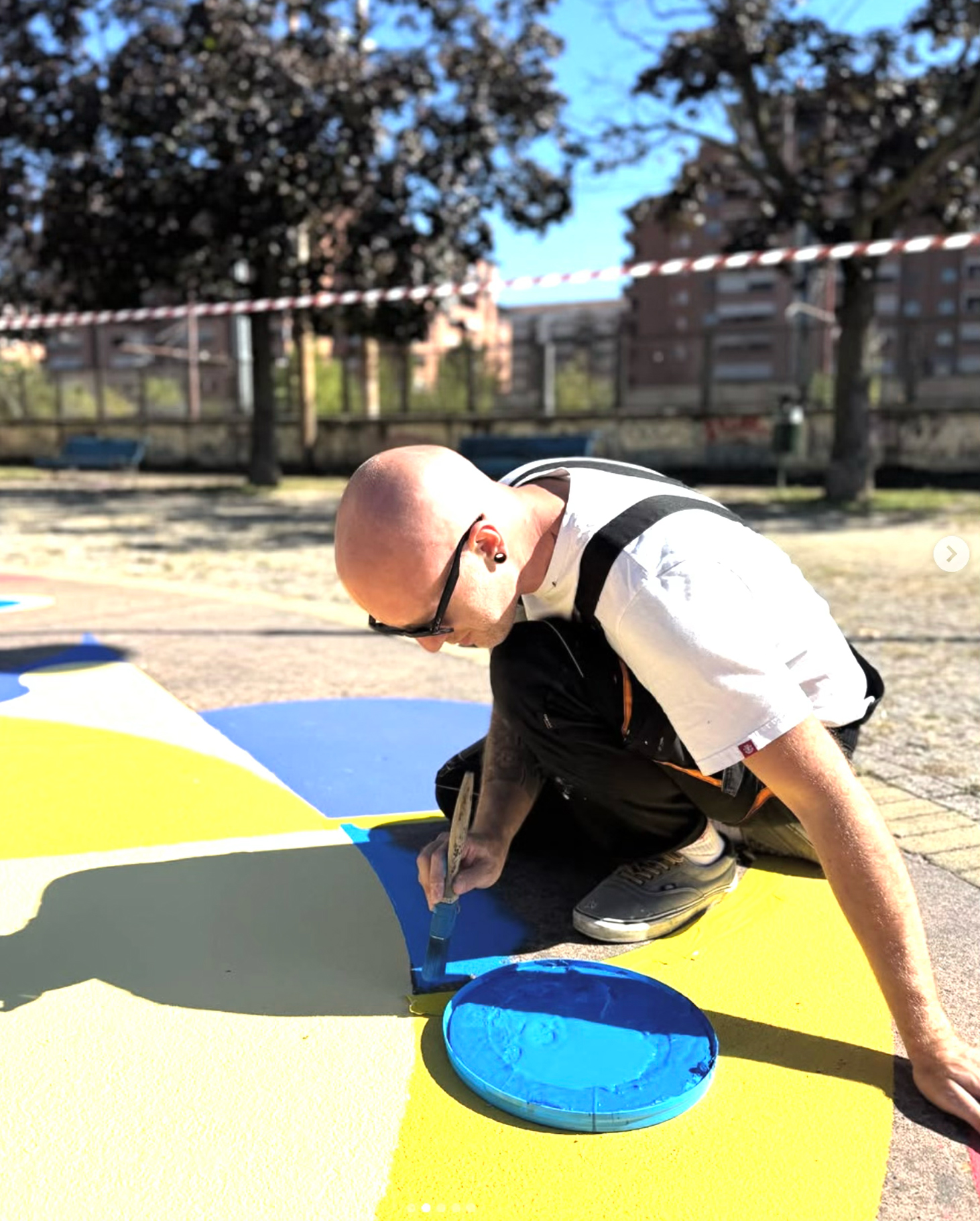
I was brought in to design the website of the project. I handled the entire process myself: from stakeholder interviews through to visual design and frontend development.
I interviewed urban planners, project managers, civil servants, and artists to gather the information needed to understand the domain and its content. That research fed directly into the design.
My responsibilities included:
- Stakeholder research and domain analysis
- Information architecture using an OOUX approach
- Visual design aligned with the project's coordinate image
- Responsive frontend development in PHP, HTML, and CSS
- Accessibility considerations
ACTION
Choosing the right design approach
The project presented an interesting information architecture playground: multiple interconnected content types — areas, artists, residencies — each with their own attributes and relationships.
I chose Object Oriented UX (OOUX) as my design approach. OOUX focuses on identifying core objects and their relationships before designing any screens. It acknowledges that people think in terms of objects and need consistent, recognisable entities to navigate a product: Information Architecture in full effect.
ACTION — OOUX STEP 1
Noun foraging
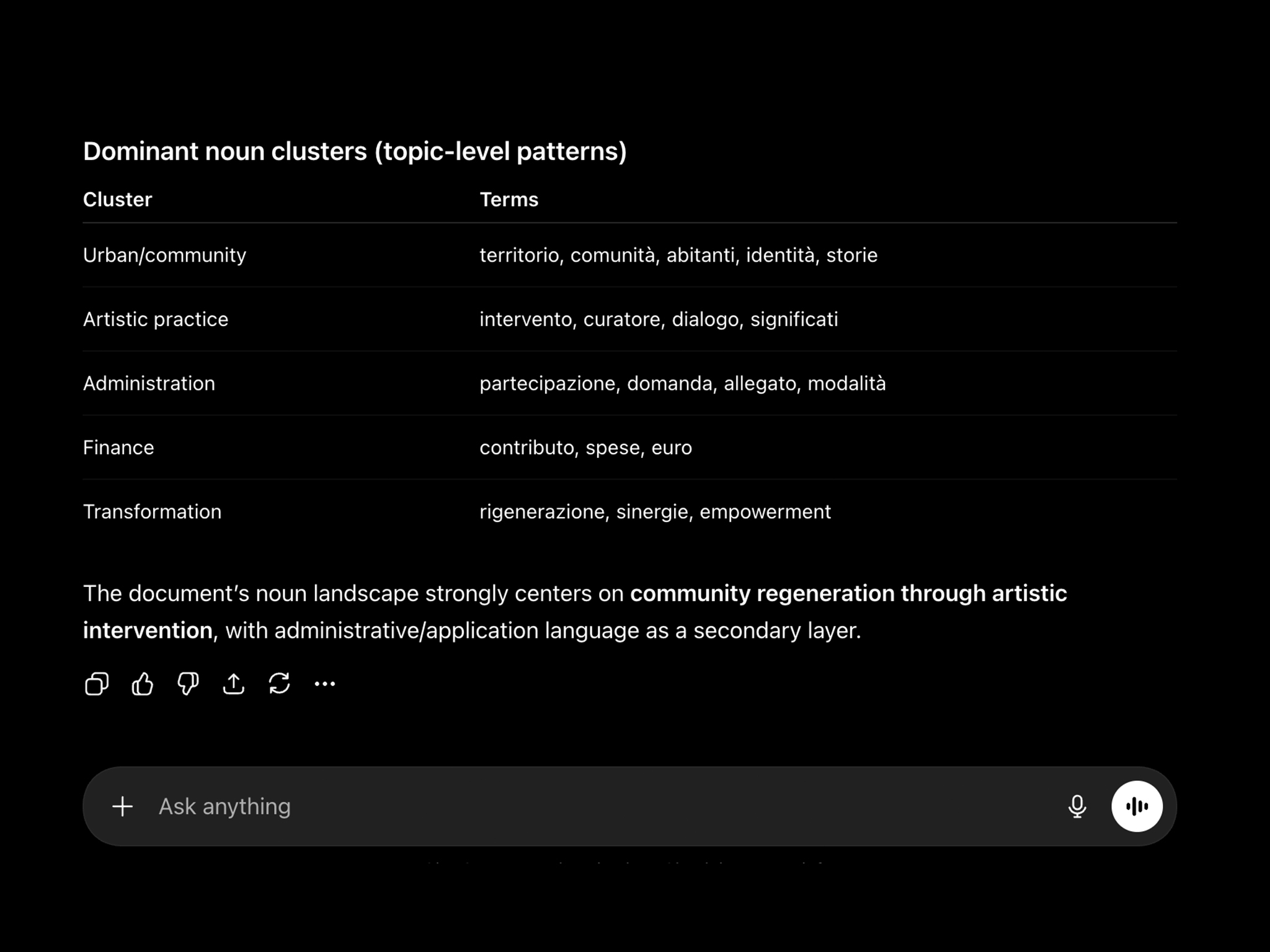
I used an automated approach to cover the documentation quickly. I fed all available project documents into an early LLM (2022) and asked it to extract every noun: every reference to a thing, place, person, or concept. The output was a raw, unfiltered list of candidate terms.
Using a machine for the first pass meant nothing was missed. The fun part came next.
ACTION — OOUX STEP 2
Identifying objects and attributes
I de-duped and clustered the nouns by affinity, then I asked myself about each candidate: does it have a consistent structure? Can you point to a specific instance of it? Does it have a clear purpose in the system? If yes to all three, it's an object ready to be connected to other objects to help making sense.
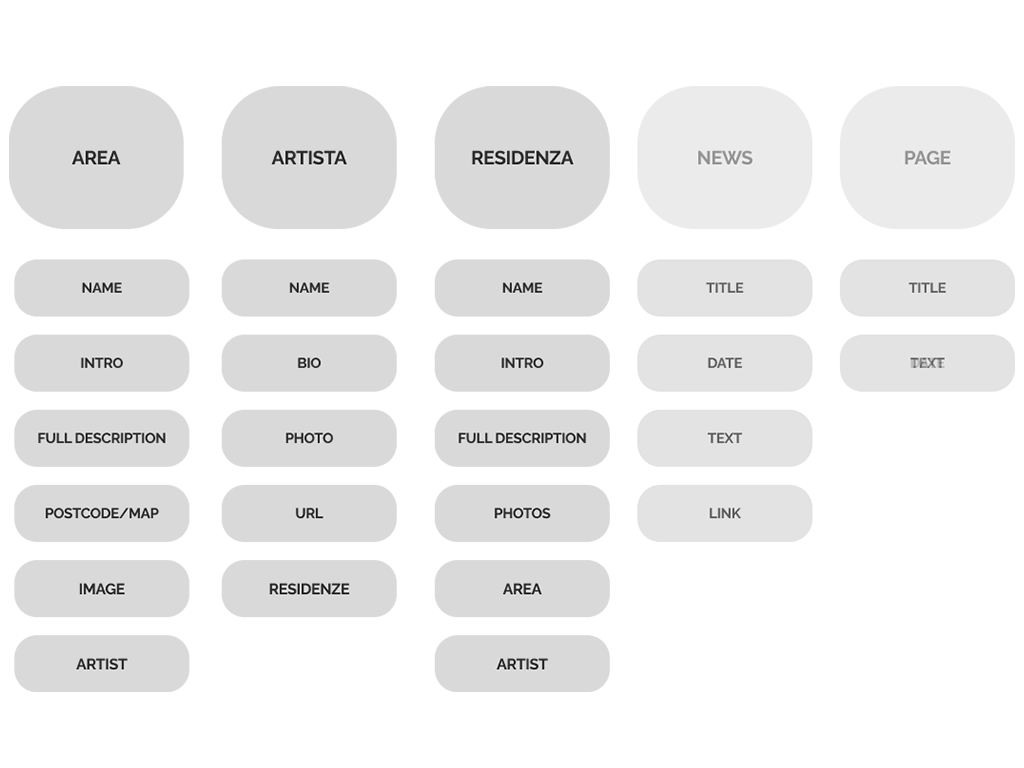
Three core objects emerged: Area, Artista, and Residenza. Two supporting content types completed the model: News and Page. With those five entities defined, the structure of the site became clear.
With the objects confirmed, I defined the attributes of each one: what data does an Area need? What does an Artista (Artist) page have to contain? What belongs to a Residenza (Residency)?
This step turned abstract objects into concrete content models, giving the development work a clear, shared reference and ensuring nothing important would be missing at build time.
ACTION — OOUX STEP 3
Mapping relationships
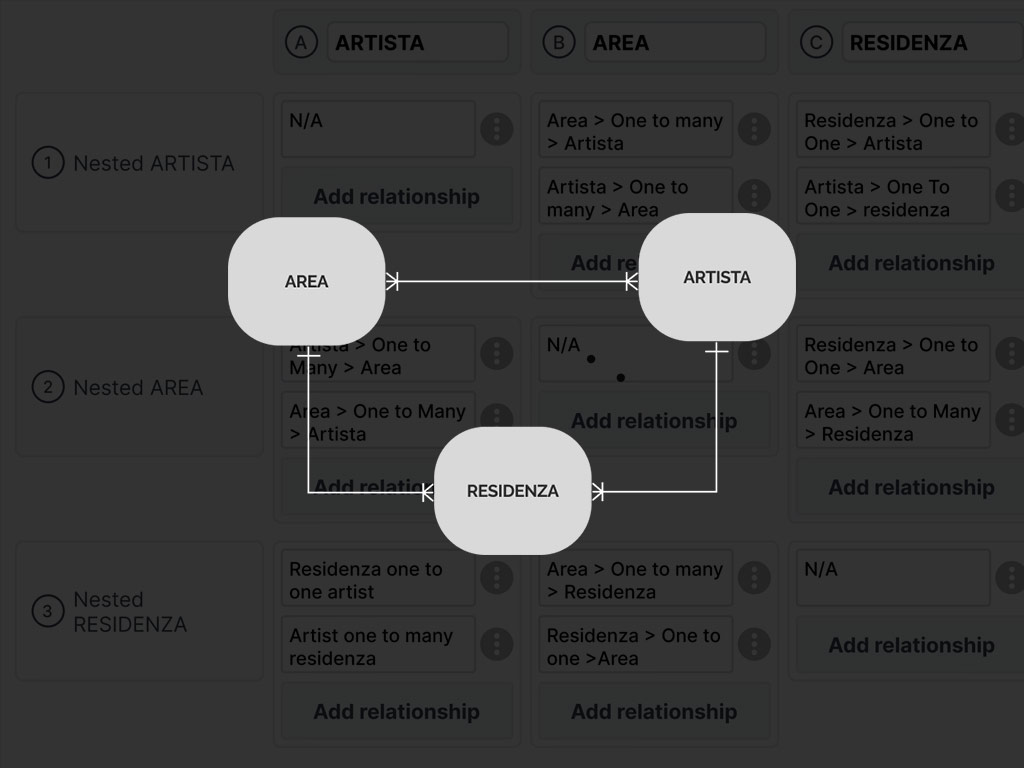
With the objects and their attributes defined, I mapped how they related to each other using a nested object matrix and entity-relationship diagrams. Artista (Artist) and Area had a many-to-many relationship; Residenza (Residency) connected to both.
The OOUX map drove the site structure directly: a simple, logical hierarchy with Areas and Artists as first-class entities, each with a dedicated page. Navigation followed naturally from the object model, without the need for arbitrary menu categories.
ACTION
Design and visual identity
I designed wireframes and a visual identity aligned with the project's coordinate image. Colour choices were checked for contrast at every step.
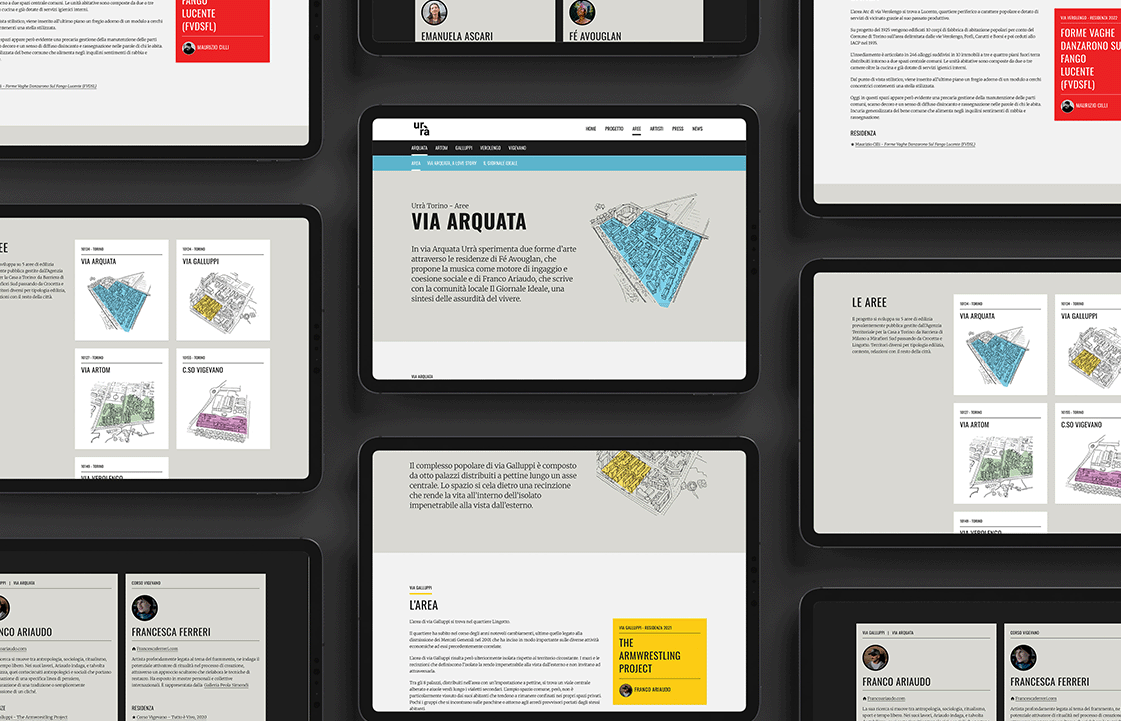
I built the site in PHP, HTML, and CSS, handling all frontend development myself. The structure mirrors the object model: each Area, Artista (Artist), and Residenza (Residency) maps to a consistent, reusable page template.
IMPACT
Community reached.
The website became a core element of the project's communication strategy. It gave the community, the press, and the public a single, coherent place to discover the artists, the areas, and the work being done across the city.
In the first two months, the site recorded over 2,000 unique visitors, a 60% bounce rate, and an average session duration of four minutes. For a local public art project in a single city, these are strong signals that people were genuinely engaging with the content.
The structured approach to information architecture also proved its value beyond launch: adding new artists, areas, and residencies required no redesign. Everything slotted into the existing object model.
Case studies
-
BBC Sounds
Sounds Collections
Designing a new collections feature to help listeners organise and rediscover content on BBC Sounds.
-
BBC Sounds
BBC Sounds on Sonos
Designing a full, personalised BBC Sounds experience for Sonos users.
-
BBC
BBC Picos
Rethinking the commissioning process — designing the pan-BBC Proposal and Commissioning Management system.